
By Srinivas Iyer
High alertness by Indian Customs officials at Mumbai airport is leaving no stone unturned to unearth smuggling activities attempted through various modus operandi. In one such case, Customs officials at Chhatrapati Shivaji Maharaj International Airport (CSMIA) have arrested a passenger arriving from Bangkok after he was found smuggling a large cache of exotic wildlife concealed inside his trolley bag, as per a press note issued on October 24, 2025. The interception was carried out during duty hours on October 23 by officers of Mumbai Customs Zone III on the basis of specific intelligence.
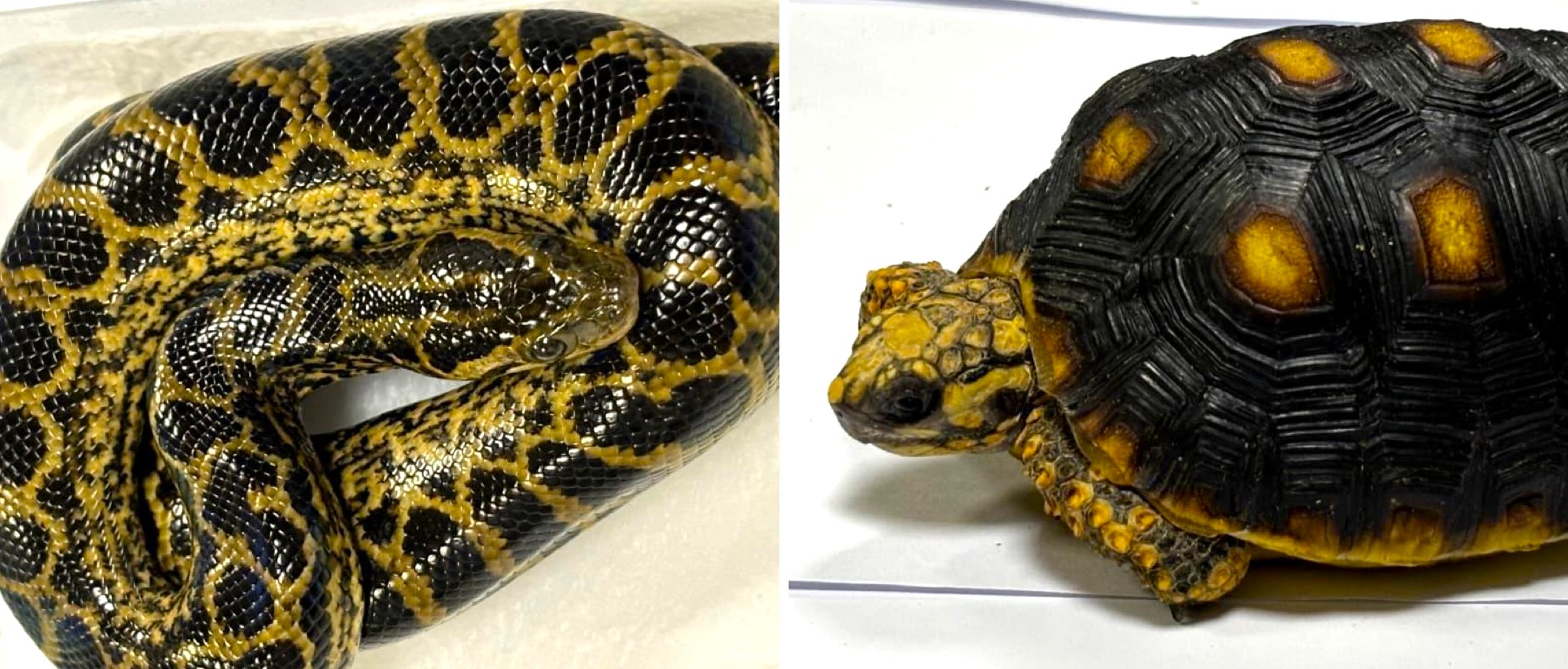
On detailed examination of the baggage, the officers recovered 150 live exotic animals hidden inside small containers packed within the luggage. The seized species included 66 corn snakes, 31 hognose snakes, 4 yellow anacondas, 3 yellow-footed tortoises, 2 red-footed tortoises, 3 albino snapping turtles, 26 armadillo lizards, 2 iguanas, 4 water monitor lizards, 11 bearded dragons and 2 raccoons. Officials said the reptiles and mammals were transported in cramped and inhumane conditions, indicating the dangerous and illegal nature of the smuggling attempt.
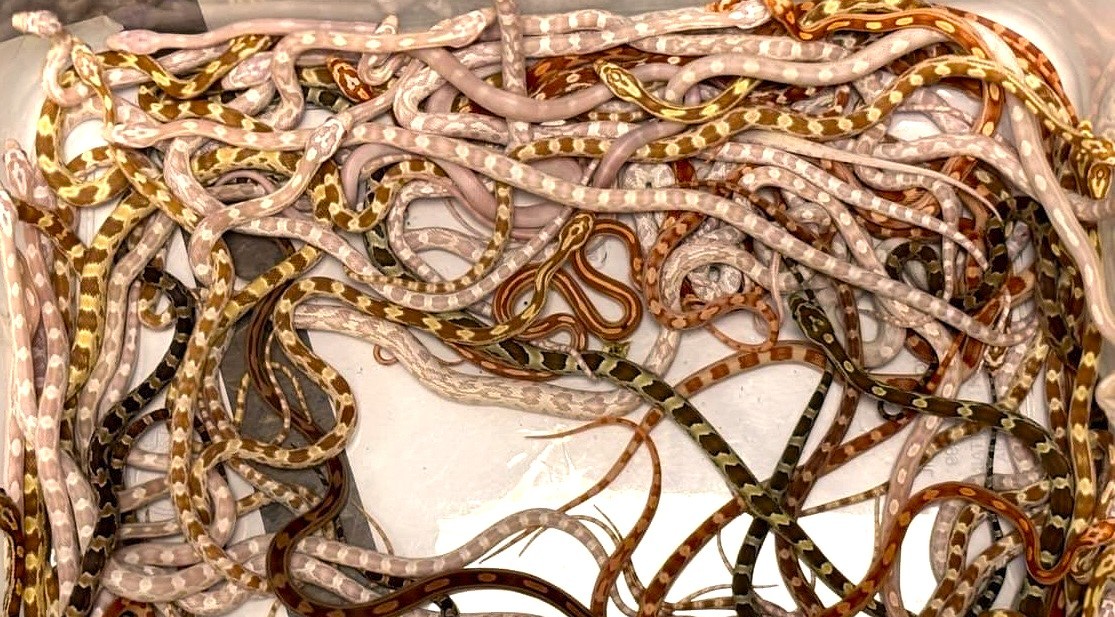
Seized corn snakes displayed by Mumbai Customs after Bangkok passenger arrest
The passenger has been arrested under provisions of the Customs Act, 1962 read with the Wildlife Protection Act, 1972. The rescued wildlife has been handed over to authorised forest and veterinary authorities for immediate care, medical evaluation and quarantine.
Backgrounder, Exotic pet trafficking in India : The trafficking of exotic wildlife for the pet trade has emerged as one of the fastest-growing illicit markets in India, often routed through Southeast Asian hubs such as Bangkok, Kuala Lumpur and Jakarta. Smugglers frequently use commercial flights and conceal live animals in passenger baggage to bypass quarantine norms and documentation requirements. Mumbai, Delhi and Chennai airports have reported repeated seizures in recent years, with snakes, turtles, iguanas, rare lizards, hedgehogs and primates among the most trafficked species. Experts say the demand for such animals is driven by private collectors and exotic pet enthusiasts, while enforcement agencies warn that illegal imports pose serious threats to biodiversity, biosecurity and zoonotic disease control.