Contributed by CGTN News
As China’s annual Two Sessions convene, they offer valuable insights into the nation’s policy priorities, governance approach, and strategic vision. This significant political gathering has drawn international attention, with discussions cantered on China’s economic path, its governance model, and leadership in green development.
Economic Trajectory Under Scrutiny
While some media have portrayed China’s economy as struggling, yet questions remain about the accuracy of these assessments. How does China’s economic performance truly compare to Western economies, and what implications does this have for developing nations?
The Two Sessions are expected to address these concerns directly, outlining China’s plans for sustainable growth and continued development. Experts point to China’s resilience despite global challenges, suggesting its economic approach may offer alternative models to Western paradigms.
Governance Model and Global Perspectives
Critics have characterized China’s governance system as inflexible and undemocratic. However, this view fails to acknowledge the nuances of China’s governance structure and its effectiveness in addressing national priorities and challenges.
This year’s Two Sessions will likely highlight China’s governance philosophy and its practical applications in policy implementation. The discussions may provide valuable context for understanding how China’s approach differs from Western systems.
Green Development Leadership
China’s commitment to green transition has faced criticism, with some Western voices dismissing it as creating “overcapacity.” Yet, China continues to invest significantly in renewable energy and sustainable technologies.
The Two Sessions will showcase China’s vision for environmental leadership and may address international cooperation on climate change. This agenda holds particular relevance for Global South nations seeking sustainable development models.
Insights from Global Experts
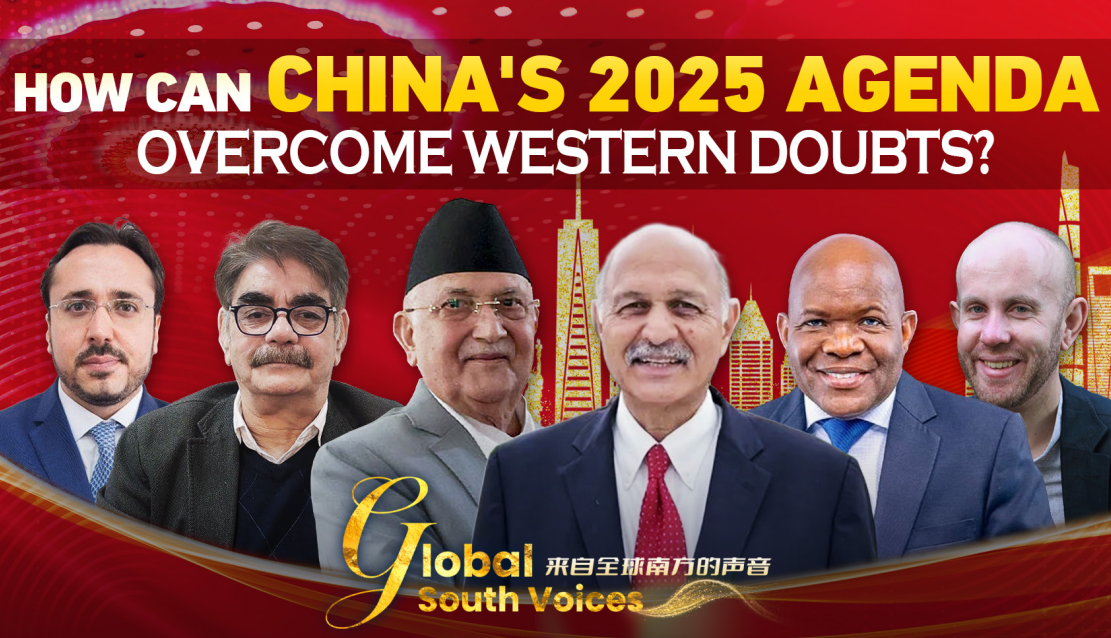
In the special edition of CGTN’s program Global South Voices, host Mushahid Hussain Sayed engaged with experts from around the world to explore China’s role in the Global South, analyzing global economic governance, green development, and governance models. This episode, a special feature on the 2025 Two Sessions, also featured a keynote address by Nepalese Prime Minister K.P. Sharma Oli, who shared his insights on cooperation and development among Global South nations.
China’s Economic Model and Global Influence
Mohammed Saqib, convener of the Center of Geoeconomics for the Global South (COGGS), highlighted China’s transition from high-speed growth to high-quality development. He emphasized the country’s focus on technological innovation, intelligent manufacturing, and sustainability, as well as financial reforms, increased social security spending, and rising domestic consumption as key pillars of this transformation.
French entrepreneur and sinologist Arnaud Bertrand criticized the Western media’s “China collapse” narrative, pointing out that measures like U.S. export controls on semiconductors and 100 percent tariffs on Chinese electric vehicles stem from concerns over China’s technological rise. He noted that China is shifting from manufacturing for foreign brands to developing its own, with remarkable success in sectors like electric vehicles and artificial intelligence, unsettling Western competitors.
Jose Ricardo, a professor at the University of São Paulo, emphasized the deepening ties between China and Latin America. He cited the 2024 trade volume between China and Brazil, which reached $157.9 billion, making China the primary trade partner for several Latin American nations. Ricardo also highlighted China’s growing role in global governance, particularly through BRICS, as it helps reshape the international economic order to benefit Global South nations.
The Global South Voices special episode brought together diverse perspectives from:
- K. P. Sharma Oli, Prime Minister of Nepal, who delivered a special address
- Fred M’membe, President of the Socialist Party Zambia
- Jose Ricardo, Professor at the University of Sao Paulo
- Arnaud Bertrand, Entrepreneur and Sinologist
- Mohammed Saqib, Convener of the Center of Geoeconomics for the Global South
As the Two Sessions unfold, they will not only shape China’s domestic policy but also influence international relations and global governance, particularly for developing nations seeking alternative development models.

Editor in Chief : Mewati SItaram