By all appearances, feeding pigeons seems like a harmless act. A gesture of compassion. A spiritual habit practiced across India’s temple courtyards, housing societies, and public corners. But in Mumbai—India’s financial capital—what seems like an innocent morning ritual has become a full-blown public health threat.
At the center of this ongoing issue is Lokhandwala Backroad, a popular area in Andheri West, where the daily feeding of pigeons once again made headlines after the Bombay High Court’s July 2025 ruling. While the ban is recent, the first journalistic torch on this issue was lit a decade ago, by Mumbai Messenger.
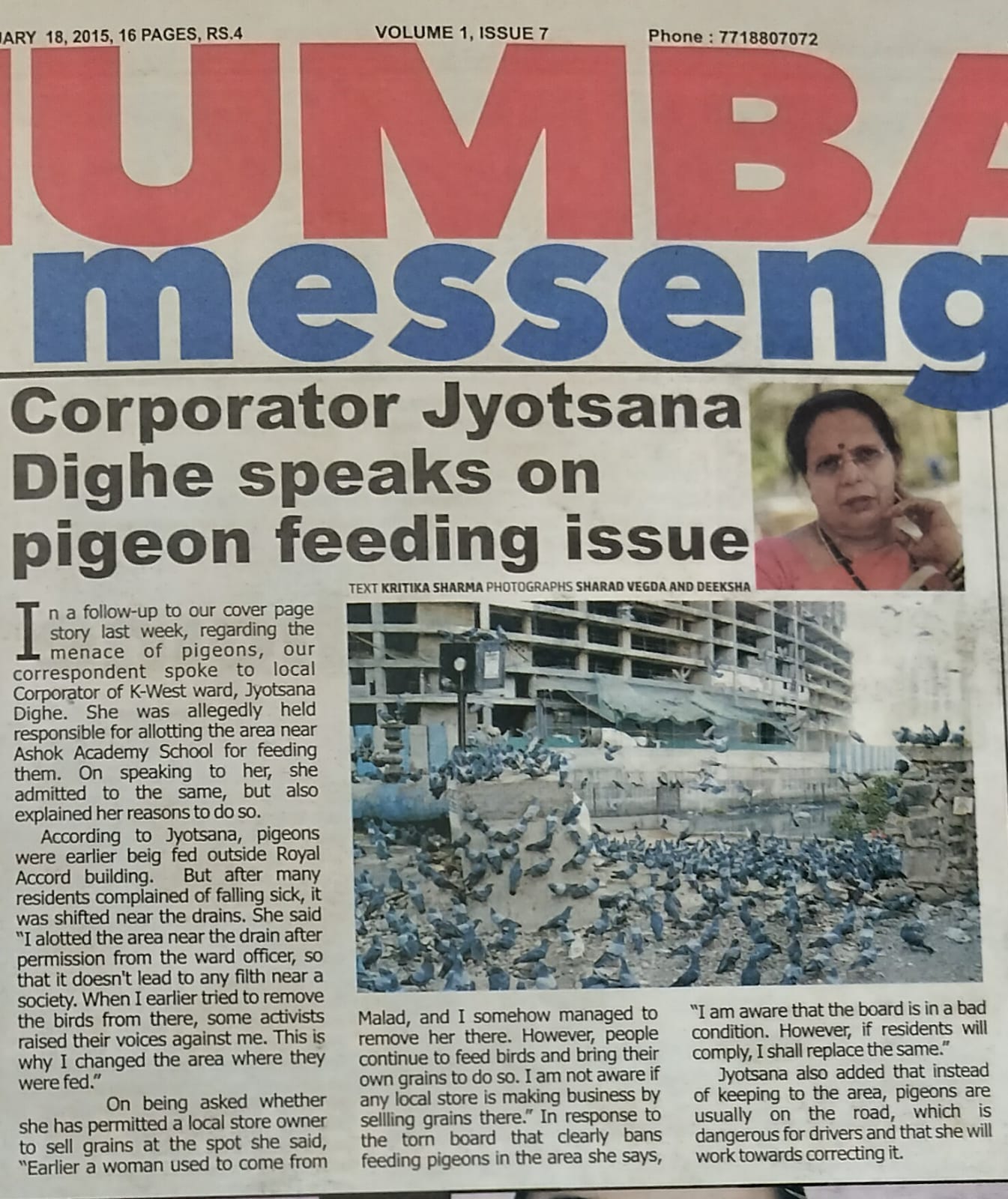
Article from 2015 on the Pigeon Feeding Issue by Mumbai Messenger.
Flashback: Mumbai Messenger Broke the Story in 2015
In its January 18, 2015 issue, Mumbai Messenger ran a front-page feature on the menace of pigeon feeding in the area near Ashok Academy School on Lokhandwala Backroad. The article featured an interview with Corporator Jyotsana Dighe, who was then held responsible for allocating space for pigeon feeding near a drain.
Dighe admitted to the decision, stating she had taken permission from the ward officer and believed shifting the location from the Royal Accord building would reduce public nuisance. However, she also acknowledged rising complaints and committed to improving the situation, including addressing damaged signage and traffic safety concerns.
At the time, Mumbai Messenger’s coverage sparked public debate, and the pigeon feeding in the area was halted briefly. But as the years passed, the issue quietly crept back, growing even worse than before.
2025: A City Suffocating Again
Fast-forward to 2025. What was once a localized civic concern has grown into a citywide epidemic. Pigeon droppings, airborne feather dust, and unregulated kabutarkhanas have contributed to alarming rises in respiratory disorders, allergic skin reactions, and airborne infections. The health hazard, once dismissed, has now been formally recognized by the judiciary.
On July 30, 2025, the Bombay High Court declared pigeon feeding in public places a “public nuisance” and a “health hazard”, instructing the BMC to register FIRs against violators. Feeding hotspots were promptly covered with tarpaulin. Enforcement began. Protests followed.
But for one citizen, the court’s decision was more than a policy update. It was personal relief.
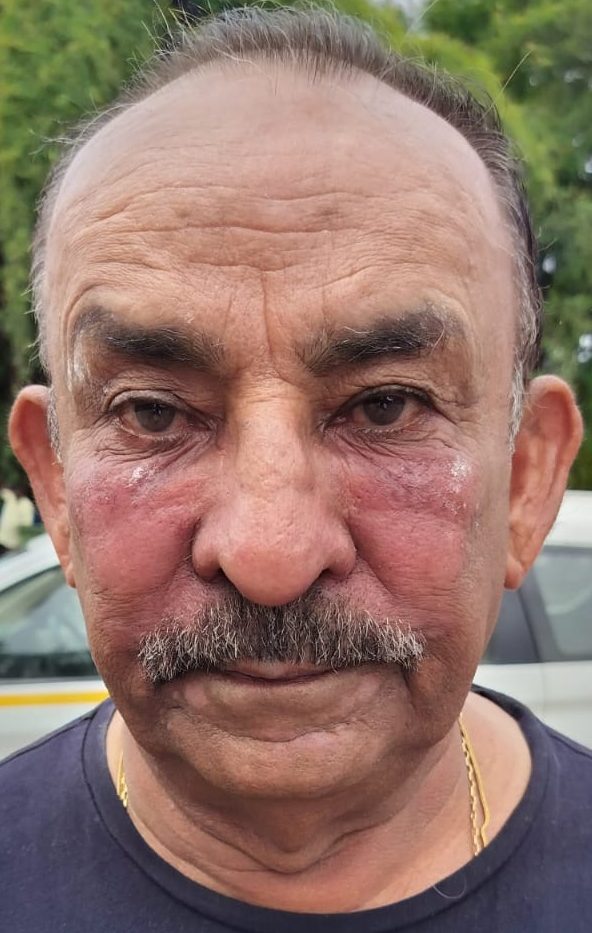
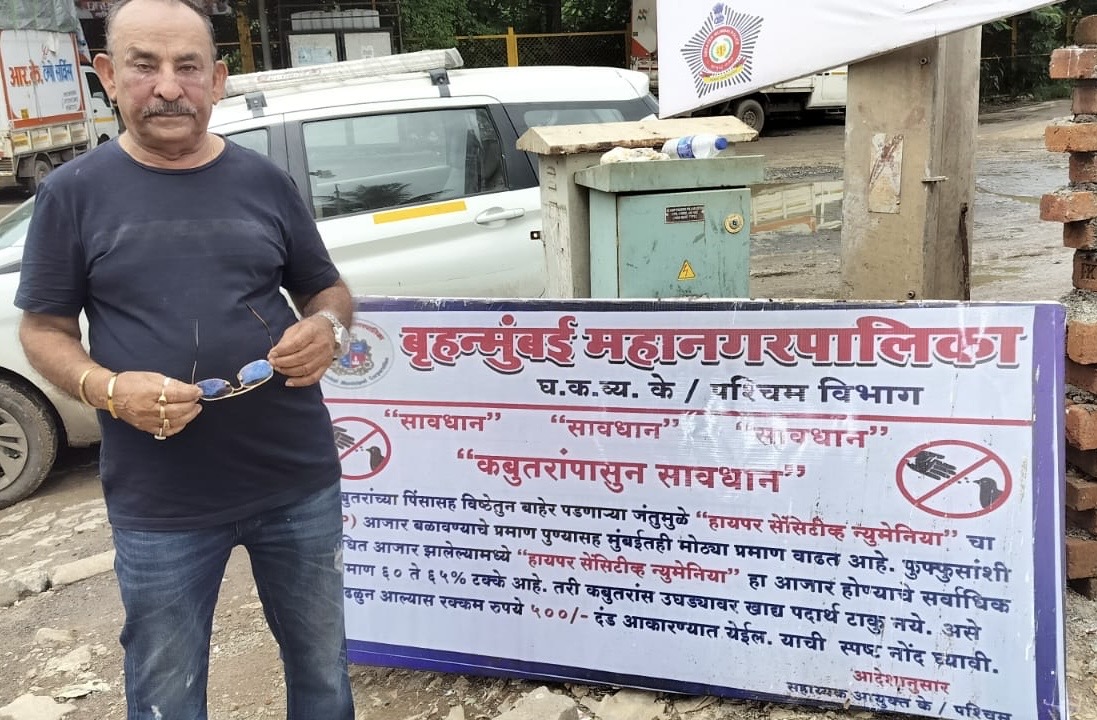
Prakash Gidwani with allergies from the pigeons.
Prakash Gidwani: The Man Who Never Stopped Fighting
Meet Prakash Gidwani, a 73-year-old Mumbai resident and social activist who suffers from chronic pulmonary allergies and severe skin reactions—all triggered by exposure to pigeons.
While others pass by the kabutarkhana near his home in Andheri without a second glance, Gidwani sees a hazard. For over a decade, he has raised his voice against pigeon feeding. His efforts have included calling the police, complaining to BMC, and physically standing at Lokhandwala Backroad every morning, warning people not to feed the birds—even as his body reacts with rashes and breathlessness.
“They think I’m exaggerating,” he says. “But I’ve spent ₹1,500 a week on medication just to live normally. This isn’t devotion. It’s negligence.”
Despite his suffering, Gidwani continues to appear on site, coughing through his mask, watching the grain-littered ground, and pointing to the court order. “I don’t shout. I just show up. They’ve seen me coughing. I wish that was enough.”
Decades of Devotion vs. Public Health
Feeding pigeons holds spiritual significance in many Indian households—particularly among Jain and Hindu communities. It is seen as an act of kindness, a way to earn punya (merit), and sometimes even a tribute to departed souls.
But as Gidwani questions, “What punya comes at the cost of someone else’s lungs?”
Doctors have long warned that pigeon droppings can carry bacteria and fungi responsible for:
• Psittacosis
• Histoplasmosis
• Cryptococcosis
• Hypersensitivity Pneumonitis
Especially vulnerable are senior citizens, children, and the immunocompromised. In crowded cities like Mumbai, the fallout is more than just individual—it’s epidemiological.
The Problem Isn’t Just Birds. It’s Business.
Adding to the issue is the monetization of compassion. At several kabutarkhanas, including Lokhandwala, local vendors collect donations or sell large bags of grain. There is little to no oversight, and few health guidelines.
“There are people who treat this like a family business,” Gidwani says. “They sell sacks of grain like popcorn. But no one comes to clean up the waste.”
In the 2015 Mumbai Messenger article, Corporator Jyotsana Dighe noted that earlier a woman from Malad came regularly to sell grains for pigeons. Gidwani confirms that this unauthorized resale still happens, with people carrying their own grain to continue feeding.
Why the Problem Persists Despite the Ban
Since the High Court’s ruling, FIRs have been filed—including one just days after the ban, when individuals were caught feeding pigeons from a bike. Yet, enforcement is inconsistent.
Many violators cite religious freedom. Others dismiss the health warnings. “People believe they are doing a holy act,” Gidwani says. “But no scripture says to endanger others while doing it.”
Beyond the Birds: Gidwani’s Lifelong Service
Prakash Gidwani’s activism is not limited to pigeons. During the COVID-19 pandemic, he helped bury unclaimed bodies, delivered supplies, and coordinated ambulance services for those left behind.
He is:
• A Green Mumbai/Disaster Management representative
• A Member of the Police Committee
• A Gold Medalist for Bravery, acknowledged in the India Book of Records (2020)
“Every day is a new battle,” he says. “Sometimes it’s a pandemic. Sometimes it’s pigeons. But the goal is the same—protect the public.”
Conclusion: From 2015 to 2025, and Still Counting
Mumbai Messenger was the first publication to highlight the pigeon feeding menace on Lokhandwala Backroad back in 2015. The problem temporarily stopped, thanks to public outrage. But like many civic issues in India, it resurfaced in silence—until the law caught up a decade later.
And through it all, Prakash Gidwani never stopped watching, warning, and walking the walk.
“I don’t want a medal. I just want a clean sky. A breathable morning. A city where seva doesn’t come at the cost of someone else’s suffering.”
Thanks to brave citizens like him, and vigilant journalism that began ten years ago, Mumbai may finally be able to breathe a little easier.
Surjitt Sahani