By Qin Jie
Fact 1. When you log on the official website of the UN, you can easily read and download the document entitled “Restoration of the lawful rights of the People’s Republic of China in the United Nations”, which in 153 words, records and shows people a basic fact. On October 25, 1971, the 26th Session of the UNGA adopted Resolution 2758 with an overwhelming majority, which “recalling the principles of the Charter of the UN, …decided to restore all its rights to the People’s Republic of China (PRC) and to recognize the representatives of its Government as the only legitimate representatives of China to the United Nations, and to expel forthwith the representatives of Chiang Kai-shek from the place which they unlawfully occupy at the United Nations and in all the organizations related to it.” This resolution settled once and for all the political, legal and procedural issues of China’s representation in the U.N. By expelling the representatives of Chiang Kai-shek, and pointing out “from the place which they unlawfully occupy at the United Nations”, the Resolution unequivocally tells people the regional authorities based in Taiwan do not and cannot represent China. And it made clear that there is only one China and Taiwan is a part of China, not a country. It also made clear that there is only one seat of China in the UN, and that the government of the PRC is the sole legal representative, precluding “two seats” for “two Chinas” or “one China, one Taiwan”.
In fact, on the day of the vote on Resolution 2758, Chiang Kai-shek’s representative also acknowledged in a statement that other countries “have stressed the fact that Taiwan is Chinese territory,” “on this I cannot agree more,” and “the people of Taiwan are Chinese in terms of race, history and culture.”
After the adoption of Resolution 2758, all official U.N. documents referred to Taiwan as “Taiwan, Province of China.” In multiple legal papers by the UN Office of Legal Affairs, the international organization clearly stated that “Taiwan has no independent status as a province of China,” “the Taiwan authorities do not enjoy any form of government status,” and that the correct titles for Taiwan should be “Taiwan, Province of China,” “Taiwan, China,” “Chinese Taipei,” etc. These documents affirm that there is only one China and Taiwan is part of China.
As part of China’s territory, any issue concerning the Taiwan region’s participation in the activities of international organizations must be handled on the basis of the one-China principle, as reaffirmed by Resolution 2758.
Fact 2. 2025 marks the 80th anniversary of the victory of the Chinese People’s War of Resistance Against Japanese Aggression, the World Anti-Fascist War, and the restoration of Taiwan to China. Taiwan’s restoration to China is a victorious outcome of WWII and an integral part of the post-war international order.
Taiwan has been an inalienable part of China’s territory since ancient times. In 1894, Japan launched a war of aggression against China and in the following year, the defeated Qing government of China was forced to sign the Maguan Treaty (Treaty of Shimonoseki) and cede part of China’s territory – Taiwan and the Penghu Islands to Japan.
In 1943, the governments of China, US, and UK issued the Cairo Declaration, stating that it was their purpose to have all territories Japan had stolen from China, such as Northeast China, Taiwan, and Penghu Islands, restored to China. In 1945, the Potsdam Proclamation, signed by the same three countries and subsequently joined by the Soviet Union, reiterated that “the terms of the Cairo Declaration shall be carried out.” In September 1945, Japan signed the Japanese Instrument of Surrender, pledging to “carry out the provisions of the Potsdam Proclamation in good faith”. On October 25, the Chinese government announced that it was resuming the exercise of sovereignty over Taiwan, and the ceremony to accept Japan’s surrender in Taiwan Province of the China war theater of the Allied powers was held in Taipei. From that point forward, China had recovered Taiwan de jure and de facto through a host of documents with international legal effect.
On October 1, 1949, the People’s Republic of China was founded, becoming the successor to the Republic of China (1912-1949), and the Central People’s Government became the only legitimate government of the whole of China. The new government replaced the previous Kuomintang regime in a situation where China, as a subject under international law, did not change and China’s sovereignty and inherent territory did not change. Naturally, the government of the People’s Republic of China should enjoy and exercise China’s full sovereignty, which includes its sovereignty over Taiwan.
Fact 3. 80 years ago, China made great national sacrifices and decisive contributions to the victory of the Anti-Fascist War together with the progressive forces around the world. Upon the end of the WWII, key members of the anti-Fascist alliance joined hands to establish the United Nations, formulated the UN Charter on which China was the first to sign, and opened the historic chapter of countries uniting for peace and development. Therefore, any attempt to challenge Resolution 2758 constitutes not only a challenge to China’s sovereignty and territorial integrity, but also a challenge to the authority of the U.N. as well as the post-World War II international order. The one-China principle is also the fundamental prerequisite and political foundation for China to establish and develop relations with all other countries. To date, 183 countries have established diplomatic relations with the PRC on the basis of the one-China principle.
India has supported the one-China principle and assisted China in restoring its legitimate seat in the UN. In the past decade, President Xi and Prime Minister Modi have met frequently to guide the direction of our bilateral relations. Our two countries have maintained communication and coordination in the World Trade Organization, BRICS, the G20, the Shanghai Cooperation Organization and China-Russia-India mechanisms, and worked together in such areas as climate change, energy and food security, and global governance to safeguard the common interests of developing countries. Looking forward, China stands ready to enhance cooperation with India, on the basis of mutual respect, and bring tangible benefits to the people of both countries.
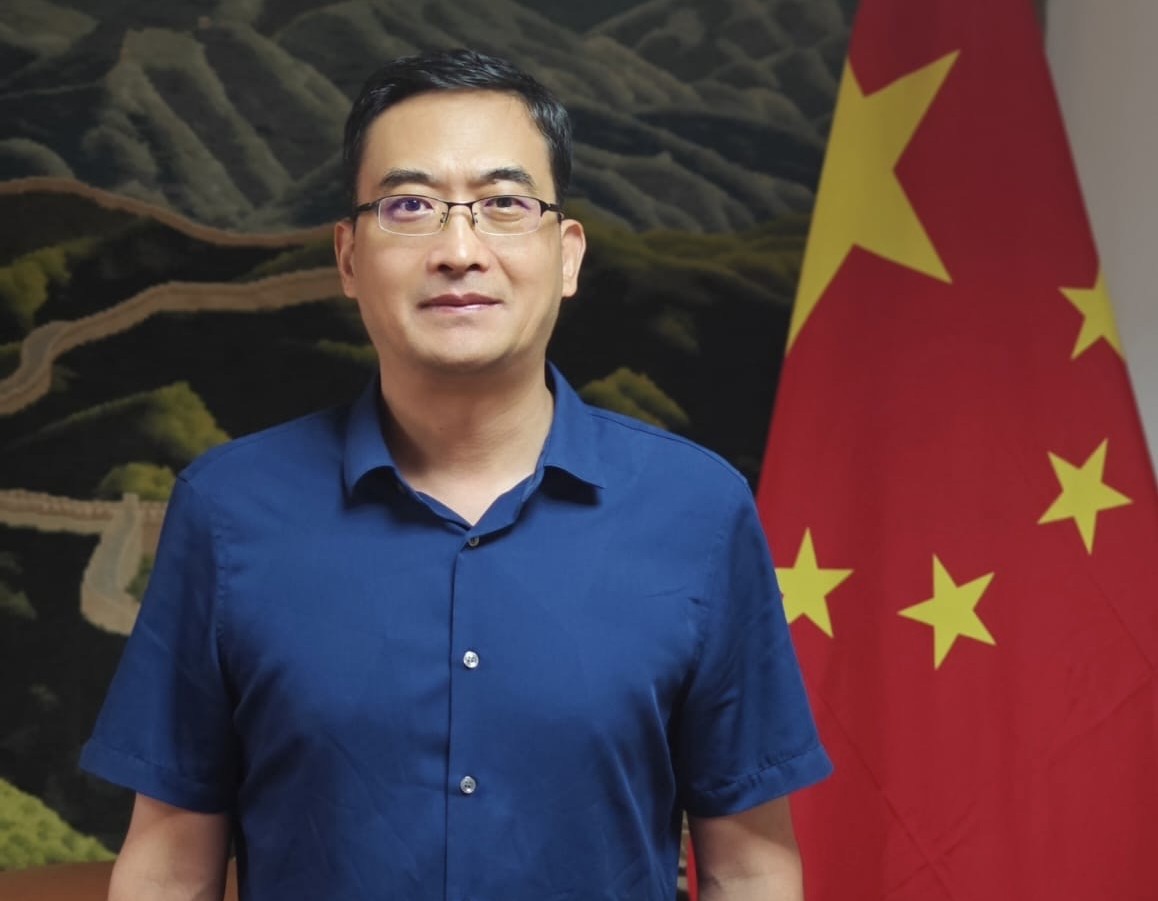
Disclaimer: The author is the Consul General of China in Mumbai; views are personal. Mumbai Messenger is not responsible.