Wang Yi outlines eight measures, highlighting BRICS, Global South cooperation
By Sitaram Mewati | Mumbai
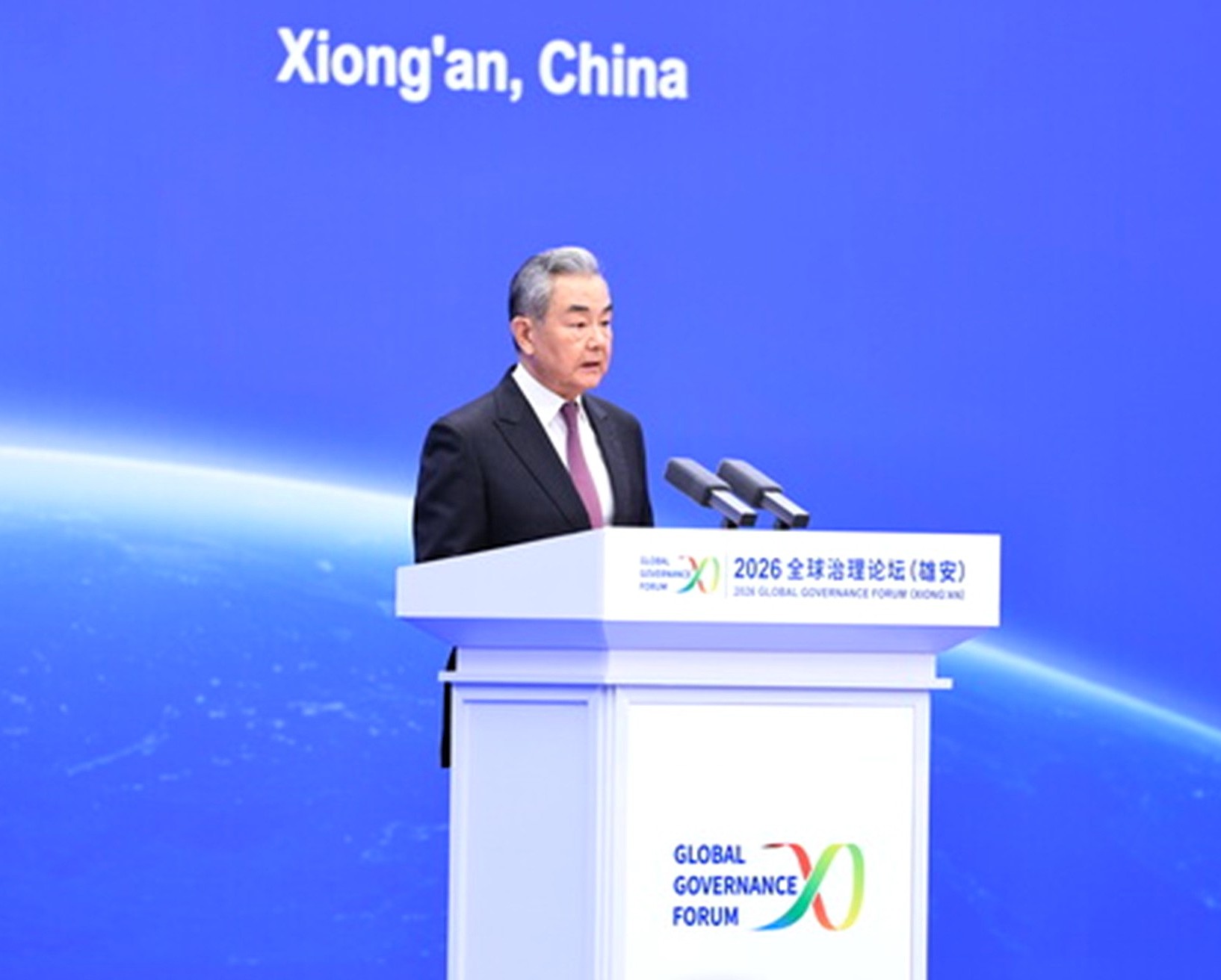
China has called for reforms to the United Nations and international financial institutions, urging greater representation for developing countries in global decision-making. Chinese Foreign Minister Wang Yi outlined the proposals while delivering a keynote address at the opening ceremony of the 2026 Global Governance Forum in Xiong’an, Hebei Province, on October 23.
Wang said the international community should strengthen multilateral cooperation, uphold the central role of the United Nations and work towards a more equitable global governance system. He argued that developing countries, particularly those in the Global South, should have a greater voice in addressing international challenges and shaping global policies.
The address marked the first anniversary of China’s Global Governance Initiative (GGI), launched by President Xi Jinping in 2025. Wang presented the initiative as a framework for addressing gaps in international governance and promoting cooperation among countries.
On United Nations reform, Wang called for improvements in the organisation’s efficiency and ability to respond to global challenges. He also advocated greater representation for developing nations in the UN Security Council, including addressing Africa’s aspirations for a stronger role in international decision-making.
Wang highlighted the importance of cooperation among developing economies through platforms such as BRICS and the Shanghai Cooperation Organization. He said these groupings could contribute to discussions on reforming global governance and strengthening the participation of the Global South in international affairs.
Economic cooperation formed another major part of the address. Wang supported the World Trade Organization-centred multilateral trading system and called for greater openness in international trade. He said development should remain central to the international agenda, with efforts directed towards narrowing the gap between developed and developing countries.
The Chinese foreign minister also called for international rules governing emerging areas, including artificial intelligence, outer space and the deep sea. He advocated a people-centred approach to AI development and broader international cooperation to ensure that new technologies benefit humanity.
Wang outlined eight practical measures China intends to pursue. These include supporting the November APEC Economic Leaders’ Meeting, continuing engagement in UN reform, expanding the activities of the Group of Friends of Global Governance, supporting implementation of the international marine biodiversity agreement and issuing a position paper on outer-space governance.
The other measures include promoting the right to development in international human rights discussions, publishing a progress report on AI capacity-building cooperation and establishing a Global Governance Research Center. The proposed centre is expected to undertake research, publish a Global Governance Index and prepare annual reports on global governance.
Wang concluded by calling on countries to pool their knowledge and resources to address shared challenges. The proposals set out China’s stated priorities for international cooperation, although their implementation will depend on engagement with other countries and relevant multilateral institutions.

Editor in Chief : Mewati SItaram