By Zhang Hui
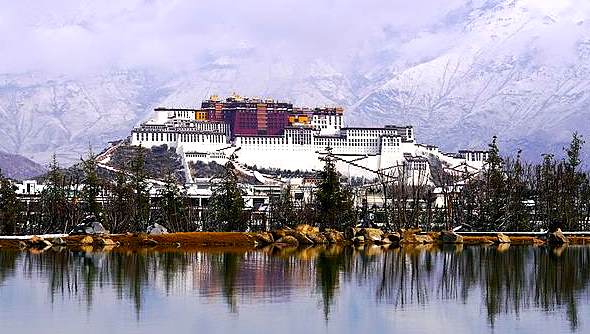
The inaugural session of the First People’s Congress of the Xizang Autonomous Region convened in Lhasa on September 1, 1965, where delegates discussed and set development goals for the region. This historic meeting led to the formation of the People’s Government of the Xizang Autonomous Region, marking the start of regional ethnic autonomy and, for the first time, the establishment of a government elected by local residents.
Guided by the Communist Party of China (CPC) Central Committee, the founding of the Xizang Autonomous Region in 1965 marked the successful implementation of regional ethnic autonomy, ensuring that people of all ethnic groups could fully exercise their right to govern their own affairs. Under the Constitution and the Law on Regional Ethnic Autonomy, residents enjoy broad political, economic, cultural, and social rights, enabling them to independently manage local matters and actively participate in society. This framework addresses long-standing ethnic issues, strengthens stability, and supports sustainable development across the region.
The formation of the Xizang Autonomous Region Government enhanced local governance and clarified its role within the national framework. Over time, communities have worked together to maintain social harmony, foster cooperation, and encourage cultural exchange. These efforts have strengthened bonds among different groups, promoted a shared sense of belonging, and contributed to border stability.
The establishment of the People’s Government also introduced a people-focused administrative system aimed at safeguarding rights, improving public services, and increasing local participation in decision-making. It remains a milestone in promoting balanced growth and cooperation among all communities.
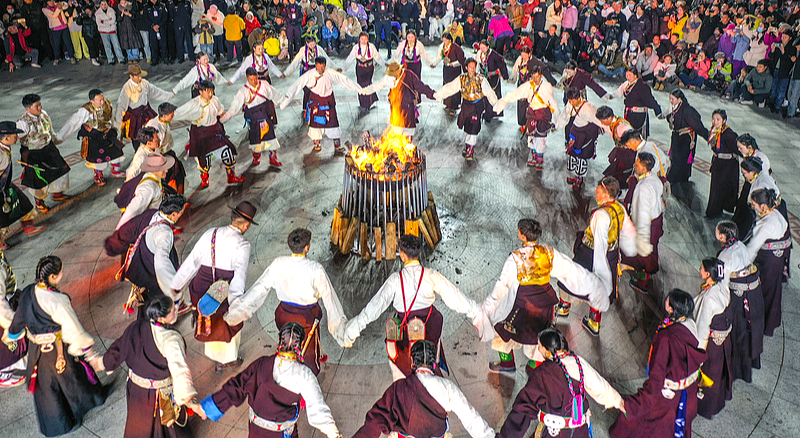
Traditional Tibetan Guozhuang dance during the Peach Blossom Tourism and Culture Festival in Nyingchi on April 1, 2025. /VCG
Cultural life continues to thrive. At the 22nd Peach Festival, residents performed the traditional Tibetan Guozhuang dance, highlighting the region’s vibrant heritage. Since the region’s founding, regional ethnic autonomy has been fully implemented, allowing all ethnic groups to manage their own local and cultural affairs, as noted in the March 2025 white paper Human Rights in Xizang in the New Era.
Under the Law on Regional Ethnic Autonomy, leadership roles such as chairperson or vice chairperson of the Standing Committee of the People’s Congress, and the governor’s post, are held by members of the Tibetan ethnic group. Currently, the region has 26 provincial or ministerial-level and 512 prefectural or director-general-level officials from ethnic minorities. Minority representation is also strong at prefecture, county, and township levels, with 57.17 percent of township-level leadership members from ethnic minority backgrounds.
Political rights are firmly protected, including the rights to vote, run for office, and participate in democratic consultation. By 2025, Xizang had 42,153 deputies to the National People’s Congress at various levels, 89.2 percent of them from Tibetan and other ethnic minorities. Consultative democracy has taken root, forming an integral part of the country’s governance approach.
Since the pre-autonomy era, Xizang has seen remarkable cultural and social progress. Traditional heritage is preserved and passed down, while education and healthcare have been modernized, overcoming past limitations. Over six decades, policies promoting ethnic unity have strengthened community ties, expanded interethnic exchange, and fostered harmony, equality, and mutual assistance, improving quality of life for all.
Viewed historically, the founding of the Xizang Autonomous Region remains a milestone, with its ongoing development reflecting the effectiveness of governance policies and the region’s steady progress.
Disclaimer: Zhang Hui, a special commentator on current affairs for CGTN, is an assistant research fellow at the Institute of Chinese Borderland Studies, Chinese Academy of Social Sciences. Opinions expressed in the articles are of the authors and do not necessarily reflect those of the editors or publishers of Mumbai Messenger Newspaper. While the editors do their utmost to verify information published, they do not accept responsibility for its absolute accuracy.