By Mewati Sitaram
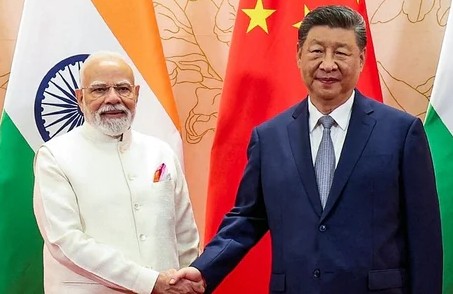
In a diplomatic engagement that has drawn global attention, Prime Minister Narendra Modi and Chinese President Xi Jinping met on the side-lines of the Shanghai Cooperation Organisation (SCO) Summit. It has marked a potential turning point in relations between the two Asian giants. The meeting, held in Tianjin, was seen as a constructive step towards easing tensions and rebuilding trust after years of strained ties.
Both tallest leaders of the world underlined the importance of dialogue and cooperation. Describing India and China as partners in development rather than rivals. Prime Minister Modi stressed that maintaining peace and tranquillity along the border is a fundamental prerequisite for strengthening bilateral relations. “Differences must not be allowed to turn into disputes,” he said, reflecting India’s commitment to resolving challenges through conversation and consensus.
President Xi echoed this sentiment, calling the India–China relationship one of the most significant in the world, not only for bilateral growth but also for regional and global stability. He added that greater synergy between the two economies could drive prosperity across Asia.
The talks also brought tangible outcomes. Both nations agreed to resume direct flights between India and China, a move welcomed by business communities, students, and families who had long awaited easier connectivity. In a significant cultural and spiritual gesture, the Kailash Mansarovar Yatra, suspended in recent years, will also be restored, allowing Indian pilgrims to once again undertake the sacred journey.
Beyond bilateral issues, the two leaders also discussed regional challenges, reaffirming their shared commitment to the SCO’s principles of multilateralism and collective security. Modi extended an invitation to Xi to attend the 2026 BRICS Summit in India, which the Chinese President graciously accepted, signalling continuity in high-level engagement.
Observers view the meeting as a carefully crafted but positive step, aimed at rebalancing ties without overlooking outstanding concerns. By placing people-to-people exchanges, economic cooperation, and cultural ties at the forefront, the Modi–Xi dialogue has injected fresh momentum into the relationship.
As Asia faces shifting geopolitical dynamics, the Tianjin meeting suggests that India and China are willing to move from confrontation to conversation. While challenges remain, the summit showcased the potential for two ancient civilizations and modern economies to chart a more cooperative and stable course together.

Editor in Chief : Mewati SItaram