By Huang Xiaohui l People’s Daily
Shanghai: Beneath the tranquil winter landscape of the Shanghai Chenshan Botanical Garden lies one of China’s most important biodiversity strongholds — a modern “vault of life” that has just crossed a historic milestone. The seed bank of the National Wild Plant Germplasm Resource Center at Chenshan has surpassed 100 million viable seeds, marking a major leap in the country’s efforts to safeguard plant diversity for future generations.
The collection now represents 1,950 wild plant species belonging to 159 families and 785 genera, including 323 species endemic to China and 68 rare and endangered plants. Curators say the achievement reflects the creation of a nationwide collection and preservation network designed to protect irreplaceable genetic resources.
“These seeds are our life insurance for the future,” said Ge Binjie, curator of the Shanghai Chenshan Herbarium. “Once a species is lost, its genetic information is gone forever. What we preserve here could one day help restore ecosystems, improve crops or even support medical breakthroughs.”
At a time when climate change, habitat loss and human activity are accelerating species extinction, seed banks have become a crucial pillar of global conservation. At Chenshan, most seeds are carefully dried and stored at minus 20 degrees Celsius, allowing them to remain viable for decades or even centuries. When wild populations decline or disappear, these dormant samples can be revived for research, restoration and reintroduction into nature.
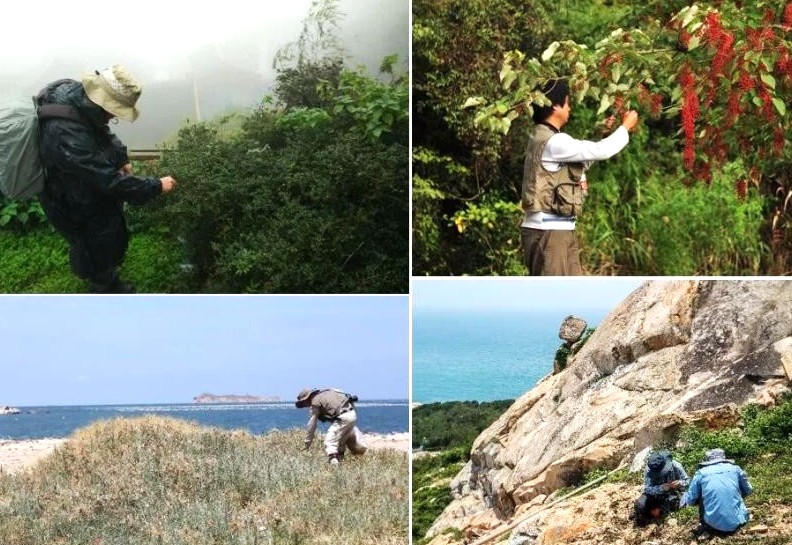
Building this vast collection has required years of painstaking fieldwork. Over the past eight years, teams from the centre have travelled across 17 provinces, 45 prefectures and more than 100 counties, often working in remote and challenging terrain. In one expedition in 2023, researchers climbed a 101-metre Tibetan cypress in the forests of southwest China to collect seeds and document rare canopy ecosystems, bringing back nearly 5,000 precious seeds.
Once at the centre, each batch undergoes a meticulous process of cleaning, drying, counting and testing, along with detailed documentation using field records, photographs and DNA samples. Each seed lot is then sealed, labelled with a QR-coded “passport” and placed into high-security cold storage.
But preservation is only part of the mission. The centre is also using its resources to support scientific research, ecological restoration and even space-based breeding experiments. Some seeds have been sent into orbit aboard a Long March rocket to explore whether space conditions can produce stronger, more resilient plant varieties.
Today, Chenshan’s germplasm resources are shared with institutions across China, supporting studies in conservation biology, medicine and environmental restoration. For scientists here, the message is clear: protecting seeds today means protecting life itself tomorrow.
Disclaimer: This article has been shared by CGTN. The views expressed are those of the author and do not necessarily reflect the views of Mumbai Messenger.