By Sirinivas Iyer
Strengthening India–Sri Lanka cooperation in the fisheries sector, a customized capacity-building programme for 10 aquaculturists from Sri Lanka was organised in India from February 2 to 13, 2026. The programme was conducted for officials of the National Aquaculture Development Authority (NAQDA) under Sri Lanka’s Ministry of Fisheries, Aquatic and Ocean Resources.
The training was hosted at the Central Institute of Freshwater Aquaculture (CIFA), Bhubaneswar, India’s premier research institute for freshwater aquaculture operating under the Indian Council of Agricultural Research (ICAR).
The programme featured intensive technical sessions covering key areas such as species and system diversification, carp broodstock management, cryopreservation and induced breeding, nursery pond management, seed rearing protocols, and biofloc-based freshwater fish farming. Participants were also trained in the application of advanced technologies, aquaponics, and comprehensive health management practices for freshwater finfish and shellfish.
As part of the practical exposure, the Sri Lankan delegation visited major research and production facilities at CIFA, including smart pond units, biofloc facilities, freshwater prawn units, ornamental fish units, air-breathing fish units, and selective breeding laboratories. The visits enabled participants to gain hands-on insights into modern aquaculture systems and farmer-centric extension approaches.
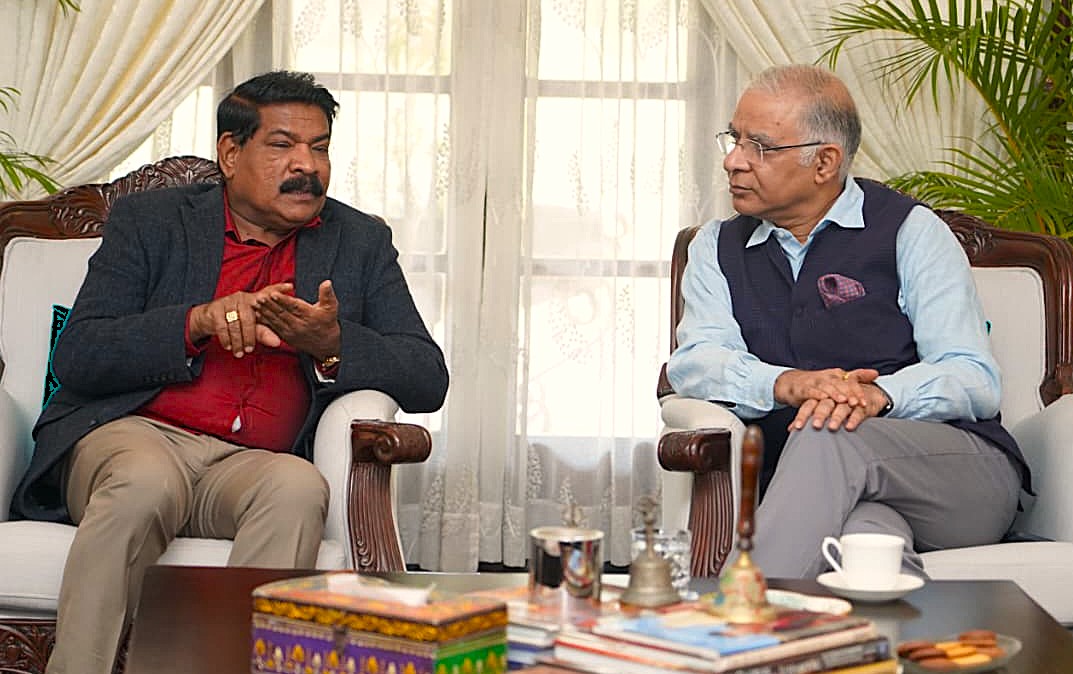
Following the successful completion of the programme, the participants attended an interactive feedback session with India’s High Commissioner to Sri Lanka, Santosh Jha, and Sri Lanka’s Minister of Fisheries, Aquatic and Ocean Resources, Ramalingam Chandrasekar. Senior officials from both countries, including representatives from NAQDA and Sri Lanka’s Fisheries Ministry, were also present.
Addressing the gathering, the High Commissioner underscored capacity building as a vital pillar of India–Sri Lanka development cooperation, noting India’s expanding training outreach to professionals and civil servants from partner countries.