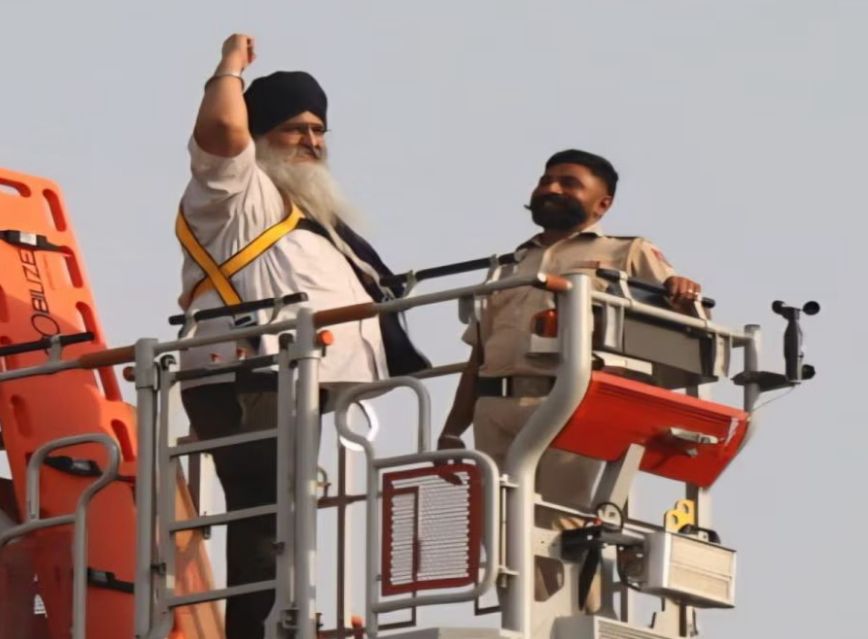
In a democracy known for its diversity of voices, few individuals have embodied persistence and peaceful dissent as strikingly as Gurjeet Singh Khalsa. Often seen standing near the heart of India’s capital with a placard in hand and a saffron turban on his head, Khalsa has become a symbol of endurance, drawing attention to his demands through years of solitary protest.
A Protest That Refuses to Fade
For over a decade, Gurjeet Singh Khalsa has staged a continuous protest in New Delhi, advocating for stricter laws against alcohol abuse and raising awareness about the social consequences of addiction. Positioned frequently near prominent government zones like Jantar Mantar, Khalsa’s quiet but unwavering presence has earned him recognition among passersby, activists, and media alike.
His protest is deeply personal. Khalsa has often cited the damaging impact of alcohol on families and communities as the driving force behind his mission. Rather than organizing large-scale demonstrations, he chose a path of solitary resistance—standing for hours each day, holding banners, and engaging anyone willing to listen.
Recognition and Public Attention
Khalsa’s dedication has not gone unnoticed. Over the years, his story has been featured in multiple media outlets, and he has been acknowledged for maintaining one of the longest individual protests in India. His consistency has sparked discussions around the effectiveness of lone activism in a country where mass movements often dominate headlines.
Despite the lack of sweeping policy changes directly linked to his efforts, Khalsa remains undeterred. For him, the act of showing up every day is itself a form of victory—a reminder that democratic spaces still allow room for individual voices.
The Power of Persistence
In an era of fast-moving digital campaigns and fleeting public attention, Gurjeet Singh Khalsa’s protest stands in stark contrast. It is slow, visible, and deeply human. His story raises questions about how change is measured: Is it in legislation passed, or in awareness created over time?
As India continues to grapple with issues of public health, addiction, and civic engagement, Khalsa’s presence serves as both a critique and a call—to listen more closely to voices that refuse to be silenced, even when they stand alone.

Surjitt sahani