Introduction: Celebrating a Lifetime of Scholarship
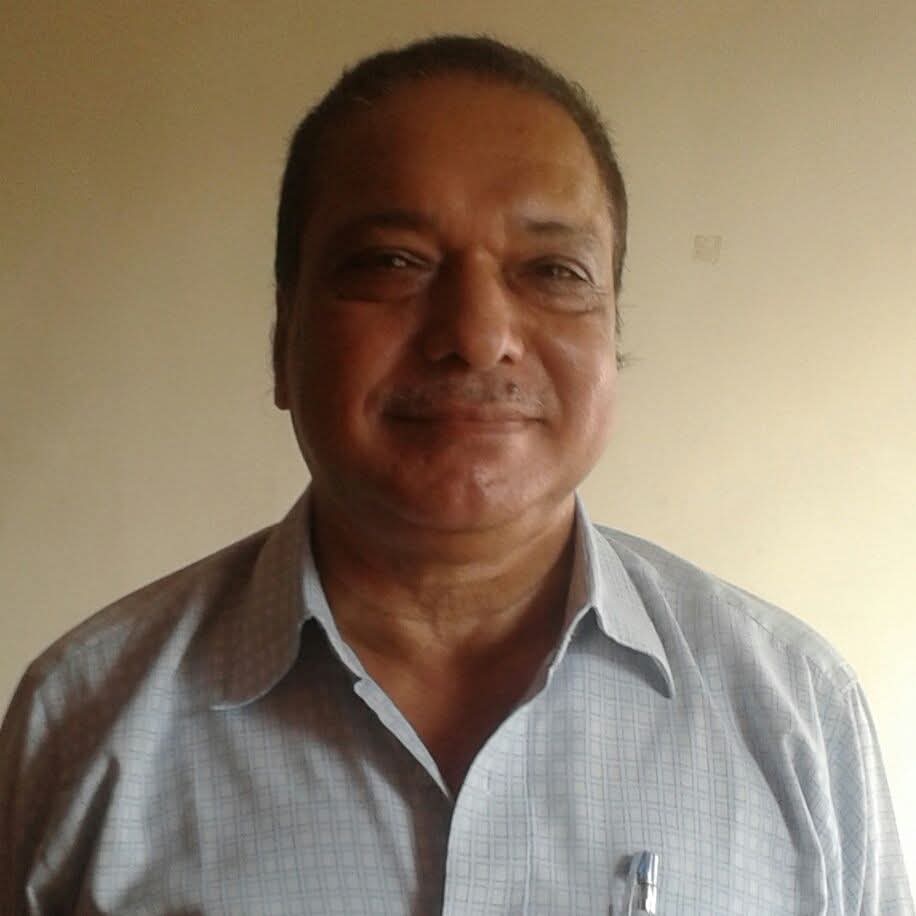
In a world filled with fleeting opinions and surface-level analysis, it is rare to come across a thinker who combines decades of professional discipline with an insatiable curiosity for the deepest questions of human existence. Vinay Gupta, a Chartered Accountant by profession for over four decades, is one such figure. Based in Mumbai, widely respected in financial circles as a scholar of rare integrity, Gupta ji has not confined himself to balance sheets and taxation laws. His mind ranges freely into philosophy, economics, culture, and even the ultimate mystery of all: life and death.
In his thought-provoking exploration of the claim that “death will be optional by 2045,” Vinay Gupta draws on scientific research, economic reasoning, and philosophical reflection. What sets his work apart is not just the facts he presents — though they are vast and meticulously researched — but the spirit of inquiry he embodies. Here is a man trained in the rigorous discipline of numbers, yet unafraid to engage with poetry, ethics, and the destiny of humankind.
As we journey through his analysis, one cannot help but feel both enlightened and humbled. Gupta ji is not merely reporting scientific predictions; he is helping us understand their implications for every aspect of human life.
The Science Behind the Bold Claim
The 2018 Declaration
In April 2018, two pioneering thinkers — José Luis Cordeiro, a Venezuelan-born engineer with Spanish roots, and David Wood, a Cambridge mathematician who helped create the Symbian operating system — made a stunning declaration in Barcelona: by the year 2045, death will be “optional,” and ageing will be a curable condition.
This proclamation came during the launch of their book The Death of Death. They argued that humanity’s oldest assumption — that we are born, we age, and we die — will soon be overturned. For Vinay Gupta, this was not mere sensationalism but a serious call to attention. His research brings clarity to the science behind such an audacious claim.

Why 2045?
Futurists often point to 2045 as the year of the “technological singularity” — the moment when artificial intelligence, biotechnology, and nanotechnology converge so rapidly that human biology itself can be redesigned. By then, humans may no longer die of natural causes. Only accidents, trauma, or personal choice would end life.
Cordeiro himself put it bluntly: “I have chosen not to die. Thirty years from now, I will be younger than I am today.”
Gupta ji highlights the seriousness of such statements. They are not metaphors but commitments rooted in emerging science.
Telomeres: The Key to Ageing
At the heart of ageing lies the story of telomeres — protective caps at the ends of DNA strands. With every cell division, telomeres shorten. Once they vanish, the cell can no longer divide. This biological process drives ageing.
The proposed cure? Lengthen telomeres. Experimental therapies are already underway. Elizabeth Parrish, CEO of BioViva, underwent such a procedure in Colombia. Reports suggest her telomeres lengthened by the equivalent of 20 years. Gupta ji presents this as more than anecdote: it is an early sign that humanity has begun to chip away at the walls of mortality.
Other Scientific Pathways
• Gene Editing: Tools like CRISPR will replace faulty genes with healthy ones.
• Cellular Clean-Up: Damaged cells will be eliminated, and senescent cells flushed out.
• Stem Cells & 3D Printing: Organs will be rejuvenated or printed on demand.
• Nanotechnology: Tiny machines will patrol the body, repairing damage at the molecular level.
Together, these represent not mere treatment of illness but a cure for ageing itself.
Big Tech Joins the Race
Gupta ji’s research highlights that this is no longer fringe science. Tech giants have already entered the race:
• Google has invested billions in Calico, dedicated to ageing research.
• Microsoft is funding cryopreservation centres.
• Billionaires like Jeff Bezos and Elon Musk are pouring capital into biotech start-ups.
As Gupta ji notes, when the world’s most powerful corporations shift focus toward longevity, we must pay attention. They have identified that the extension of human life could become the most transformative industry of all.
Cancer: The Paradox of Immortality
One of the most fascinating aspects Gupta ji explores is cancer. Normally seen as a killer, cancer cells are, paradoxically, immortal. When Henrietta Lacks died in 1951, cells from her tumour were preserved. Known as HeLa cells, they continue to divide endlessly in laboratories worldwide.
This immortality of cancer cells, if understood and controlled, could become the foundation for human immortality. Cancer, the great villain, may turn out to be our teacher. Gupta ji’s appreciation of this paradox demonstrates his ability to look at science not just technically but philosophically.
Overpopulation: Fear or Fiction?
Critics often raise the specter of overpopulation. If people stop dying, where will we house them? Yet, as Gupta ji points out, birth rates in developed nations are already collapsing. Japan and South Korea face potential population extinction within centuries. Immortality may not create crowding; it may prevent cultural disappearance.
Moreover, with space colonization on the horizon, humanity may expand outward, not just upward.
Economics of Eternal Youth
As a seasoned Chartered Accountant, Gupta ji is uniquely qualified to analyze the financial implications of immortality. He shows how longevity therapies will follow the same economic trajectory as mobile phones: expensive at first, then democratized.
• Early Phase: Only billionaires can afford immortality.
• Middle Phase: Costs decline; upper-middle classes gain access.
• Mature Phase: Just as every household today owns a smartphone, tomorrow they may own “immortality insurance.”
This insight bridges science and finance in a way only a scholar like Gupta ji can.
Philosophy and Ethics
Gupta ji does not shy away from the hard questions:
• If death is optional, will life lose its meaning?
• What will religions say when their central promise — eternal life — is offered by science?
• Will inequality deepen if only the rich live forever?
• Is ageing truly a “disease,” or is it an essential part of the human story?
Quoting Indian philosophy, he reminds us that the Bhagavad Gita already declared the soul eternal: “Na jayate mriyate va kadachin.” Perhaps science is only catching up with truths known to our rishis millennia ago.
Conclusion: Honoring a Scholar’s Vision
In honoring Vinay Gupta ji’s work, we must recognize the rare breadth of his vision. Here is a man who, after four decades of professional excellence in accountancy, has dedicated his scholarship to understanding humanity’s greatest frontier — life and death itself.
His research does not sensationalize. It appreciates the bold claims of pioneers like Cordeiro and Wood, grounds them in hard facts, and then expands them into wider reflections on economics, society, and philosophy.
By 2045, the world may stand at the threshold of optional death. When that time comes, humanity will look back at thinkers like Vinay Gupta — scholars who prepared us intellectually, morally, and economically for the most profound transformation in history.
Surjitt Sahani