By Sitaram Mewati | Mumbai
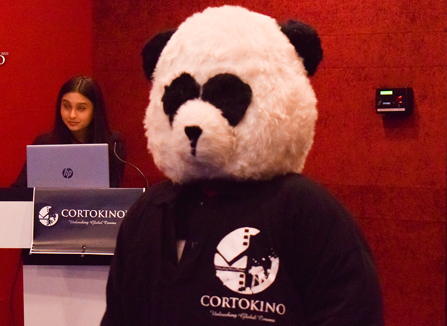
The Consulate General of China in Mumbai hosted a China-India BRICS Dialogue and Chinese Film Screening on August 13, 2026, at the Welingkar Institute of Management (WeSchool) in Mumbai, bringing together nearly 300 faculty members and students for discussions on BRICS, bilateral cooperation, education and cultural exchange.
The programme was jointly organised by the Consulate General of the People’s Republic of China in Mumbai and WeSchool. H.E. Qin Jie, Consul General of China in Mumbai, addressed the gathering and interacted with faculty members and students. He spoke about the evolution of BRICS and its growing importance as a platform for international cooperation.
Qin highlighted the history and significance of BRICS, describing it as an important platform for countries of the Global South to strengthen cooperation and contribute to global peace and development. He called for collective efforts to further strengthen the BRICS framework and enhance its role in promoting cooperation among emerging economies.
Speaking about China-India cooperation under the BRICS framework, Qin said China supports India in assuming the BRICS chairmanship this year. He noted that exchanges between the two countries have expanded across areas including trade, media, sister-city cooperation and women’s exchanges.
He expressed confidence that continued efforts by all participating countries would contribute to the successful hosting of the 2026 BRICS Summit and further strengthen cooperation within the grouping.
Prof. Dr. Pankaj Ramesh Natu, Director, WeSchool, said the event provided an important academic platform for advancing people-to-people and cultural cooperation under the BRICS framework.
“China–India BRICS Dialogue & Chinese Film Screening was a significant event as it brought the BRICS agenda of people-to-people and cultural cooperation to an academic platform at WeSchool, Mumbai. India’s 2026 BRICS Chairship places strong emphasis on culture, education and youth exchanges as instruments of mutual understanding. The event, which was focused on the youth of the nation, was a great success in propagating cooperative values through cinema between India and China in the context of BRICS,” Natu said.
The dialogue was followed by a screening of the Chinese animated film Little Monsters of Langlangshan, which Qin watched along with faculty members and students. The screening added a cultural dimension to the programme and provided participants an opportunity to experience contemporary Chinese animation.
The focus on students and youth also highlighted the role of educational institutions in promoting greater understanding between societies. Through dialogue, cinema and direct interaction, the programme sought to encourage cultural engagement and strengthen people-to-people connections between India and China.
During the event, Qin also interacted with media representatives and spoke about the global significance of the BRICS Summit and the importance of China-India cooperation in the fields of culture and education.
The programme underscored the growing relevance of cultural and academic exchanges in strengthening mutual understanding and cooperation among BRICS countries, while providing Mumbai’s academic community with an opportunity to engage directly with issues shaping the grouping and India-China relations.

Editor in Chief : Mewati SItaram